
AI strategy · operating design · implementation
Your company does not need more AI tools. It needs an AI strategy that fits the company you already have.
For CEOs running established businesses with real people, real systems, real data and real consequences when technology is implemented badly.
We start with the operating reality: the hand-offs, business rules, existing partners, systems, data and decisions that cannot simply be handed to a tool.

THE STRATEGIC SECONDUnderstand the machinery before changing it.
Operating constraints
Problems worth understanding before technology is chosen.
These are examples of operating friction, not pre-packaged service promises. The first job is to determine what is actually happening and whether it deserves intervention.
Explore the problems we solveInformation trapped across systems
Teams work from partial context while the complete answer sits across multiple tools and owners.
Manual handoffs
Important work slows between people, inboxes, documents and systems that were never designed as one flow.
Management visibility
Reports arrive late, require reconciliation or tell leadership what happened without explaining what needs attention.
Knowledge dependency
Critical company understanding lives in a few experienced people and is difficult to access, transfer or scale.
Commercial friction
Quoting, approvals, customer intelligence and follow-up carry more delay and effort than the value of the decision.
CEO dependency
Too many exceptions, explanations and operating decisions still climb back to the person with the least spare capacity.
The company map
AI is only one layer inside the company.
Touch a layer to see the operating question beneath it. None can be designed responsibly in isolation.
THE COMPANYOne connected
operating reality
operating reality
01People+
Roles, capability, judgement, accountability and adoption.
02Process+
The real sequence of work, including exceptions and hand-offs.
03Systems+
The platforms, applications and custom software already in use.
04Data+
Source, quality, ownership, sensitivity and permitted movement.
05Decisions+
What may be supported, what must be approved and by whom.
06Security+
Identity, access, boundaries, logging, revocation and risk.
07Customers / suppliers+
The external relationships and obligations the system touches.
08Reporting+
What management needs to see, trust, decide and escalate.
09Business rules+
The exact logic, calculations and permissions that cannot drift.
10Existing partners+
The people already responsible for technology, legal and delivery.
Right tool. Right job.
We are not AI maximalists.
We are operating-performance maximalists.
AI
- Interpretation
- Language
- Extraction
- Synthesis
- Reasoning support
Code
- Exact rules
- Calculations
- Permissions
- Deterministic logic
Automation
- Repeatable flow
- Routing
- Stable processes
- Known exceptions
Humans
- Judgement
- Accountability
- Exceptions
- Commercial decisions
Design around reality
We do not ask the company to start again.
We design around the company that already exists: its ERP, CRM, reporting, Microsoft 365, document stores, databases, APIs, custom systems, permissions, security policies and technology partners.
The exact environment differs. The obligation to understand it does not.
How we work
Start with one meaningful constraint. Earn the next gate.
Each gate produces evidence for a leadership decision: continue, change, pause or stop. Transformation is never declared complete because a demonstration looked impressive.
See the full engagement architectureUnderstand
Map the company, goals, constraints, systems and workflows.
Establish the foundation
Clarify data, security, access, ownership and architecture.
Choose the first win
Select one commercially meaningful operating constraint.
Design & build
Use the right mix of AI, code, automation and human judgement.
Demonstrate
Show the capability against explicit acceptance conditions.
Measure
Compare evidence against the agreed operating baseline.
Decide
Determine whether the next transformation gate has been earned.
The first operational win
The purpose is not to prove that AI is impressive.
It is to prove that the company is better.
The first implementation is chosen for commercial meaning, feasibility, ownership and evidence—not because a demo looks clever.
SELECT FOR
01Commercial value02Frequency and human effort03Data availability04Technical feasibility05Risk and dependencies06Measurement07Ownership08Approval and override needsTrust & control
Control is not a policy document.
It is a design decision.
Where does data live? What may leave? Who can read, write, approve and revoke? What is logged? What happens when AI is uncertain? These questions shape the architecture before go-live.
Least privilege Explicit acceptance Human approval Defined data boundaries
Read our trust and control approach Proof without theatre
Demonstrated, not asserted.
Measured, not promised.
Operating context
The workflow, constraints, owners and baseline are explicit.
Acceptance evidence
The agreed capability is demonstrated against defined conditions.
Management measurement
Leadership can see adoption, exceptions, quality and value.
Permissioned public proof
Only accurate, approved evidence becomes a public claim.
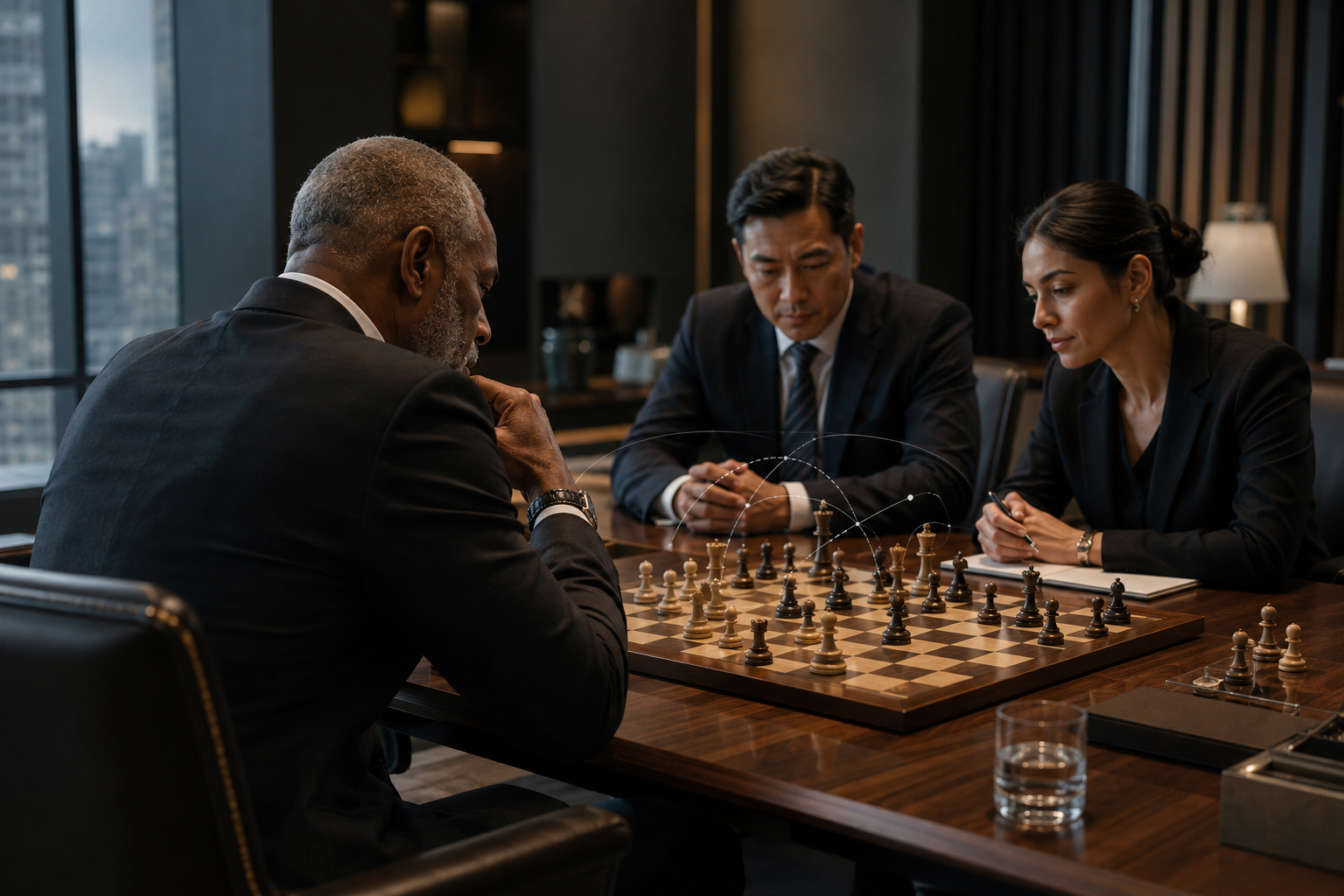
Your Strategic AI Second
The CEO remains the Grandmaster.
A serious Second investigates, researches, challenges, models, designs, coordinates and implements approved change around the person who remains accountable for the move.
The CEO retains judgement. The company gains better preparation around the decision.
Understand the Strategic SecondOperational resilience
How far could your company operate without constant human intervention?
If key people disappeared for 30 days, what continues? What stops? Where is information trapped? Which decisions could systems support, and what must remain human?
Reduce unnecessary human dependency. Do not remove human value.A small senior team
Your CEO should not have to translate between strategists and technologists.
Business context, operating design and technical architecture belong in one working conversation.
Meet the working team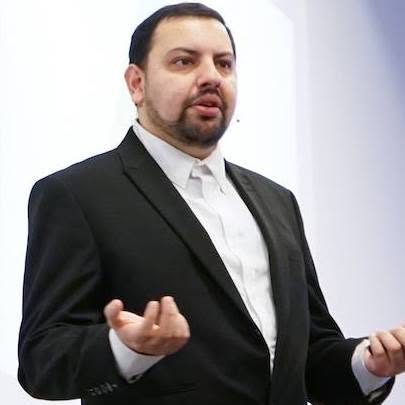
01
Founder & CEO
Mohammed Ali
Director, The Business Philosopher LtdCEO context, commercial architecture, operating priorities and the Strategic AI Second relationship.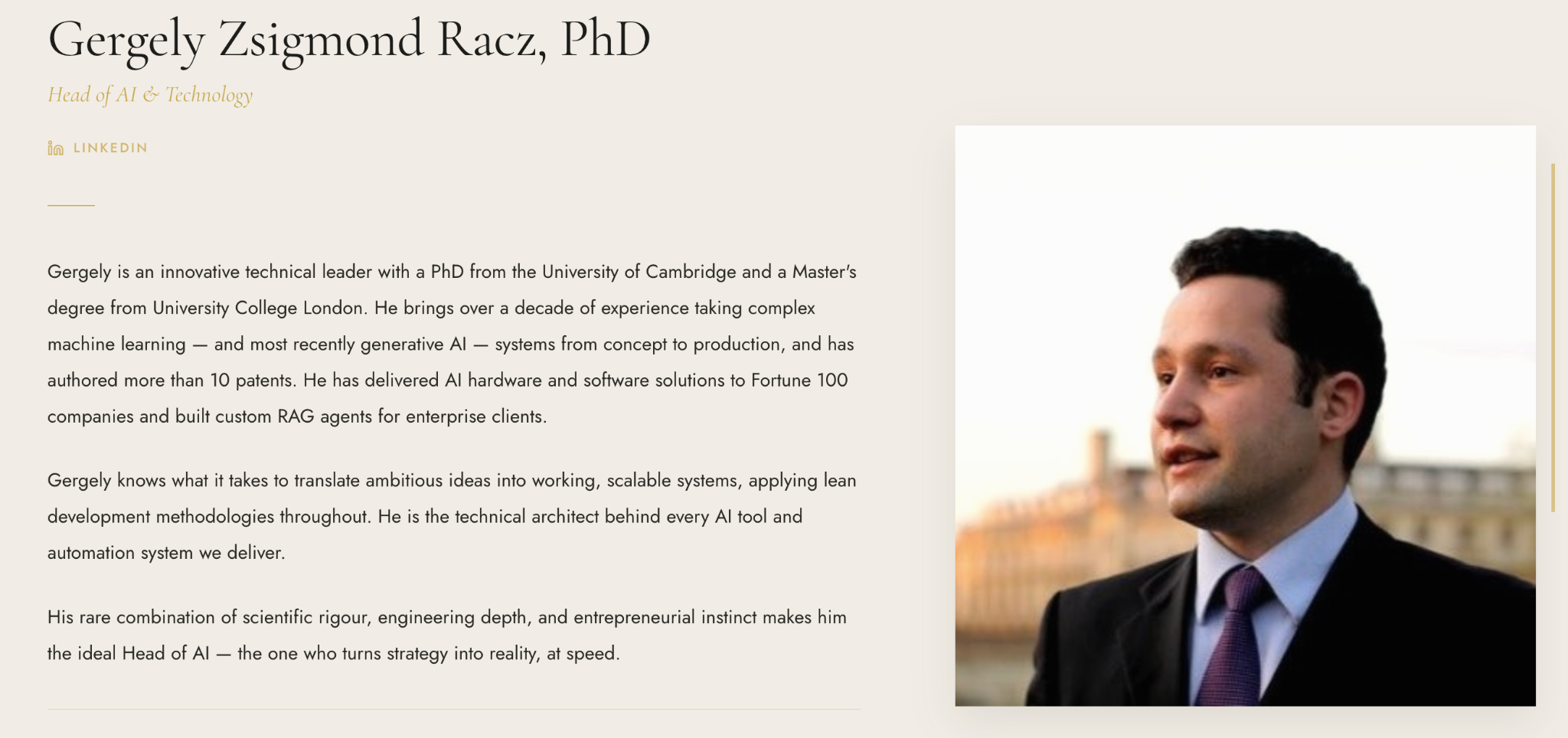
02
Head of AI & Technology
Gergely Zsigmond Racz, PhD
PhD · Cambridge · Master’s · UCLAI architecture, machine learning, engineering and turning ambitious operating designs into working systems.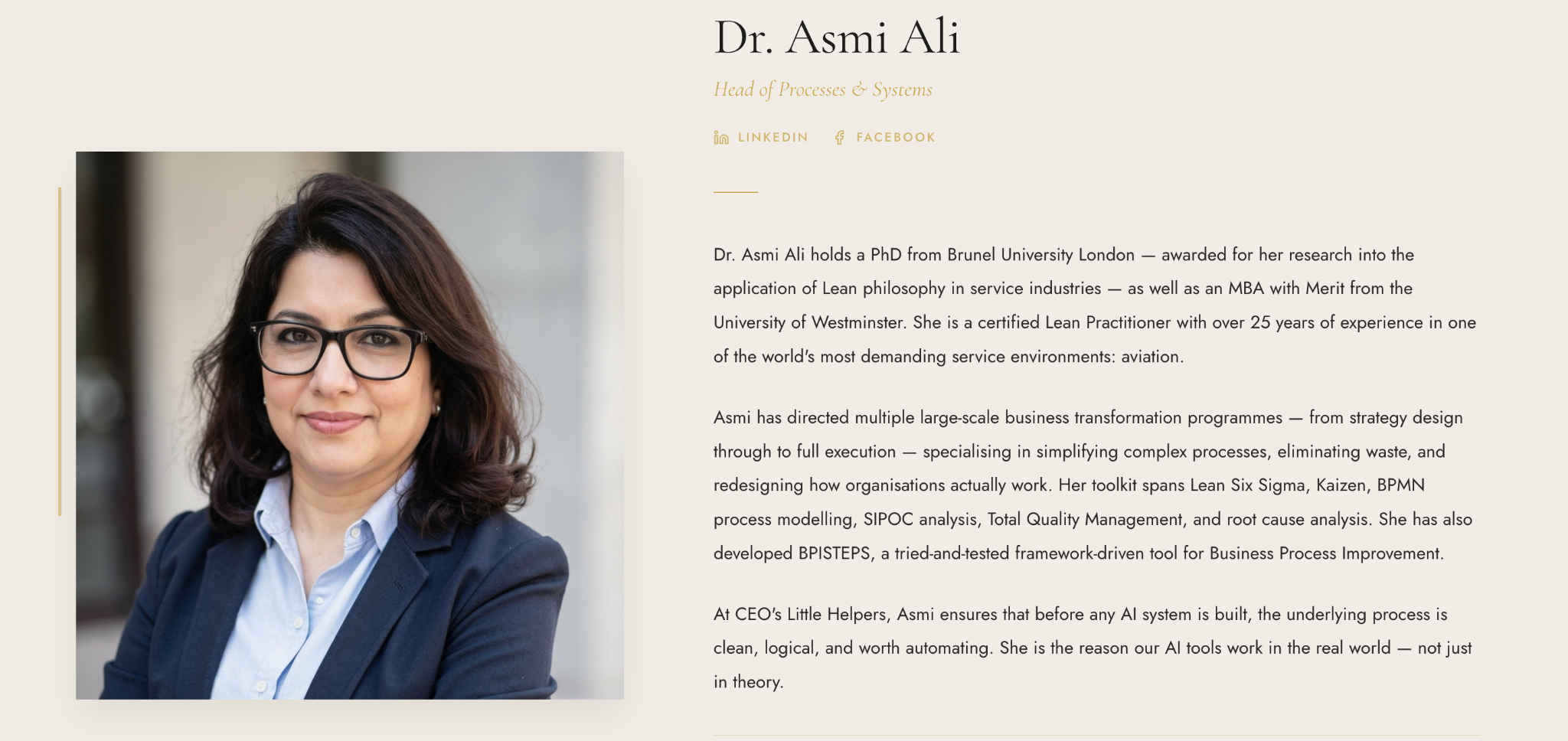
03
Head of Processes & Systems
Dr Asmi Ali
PhD · Brunel · MBA with Merit · WestminsterBusiness transformation, process design and making the work clean, logical and worth automating before technology is added.EXECUTIVE WHITE PAPER · 2026The CEO's AI
Leverage BlueprintWhere AI should sit in your company—without losing control.
Leverage BlueprintWhere AI should sit in your company—without losing control.
For the leadership team
Build the CEO's view before you fund the next pilot.
A practical field guide to counsel before tools, control boundaries, the company-wide opportunity map and choosing the smallest credible first move.
Explore the blueprint